

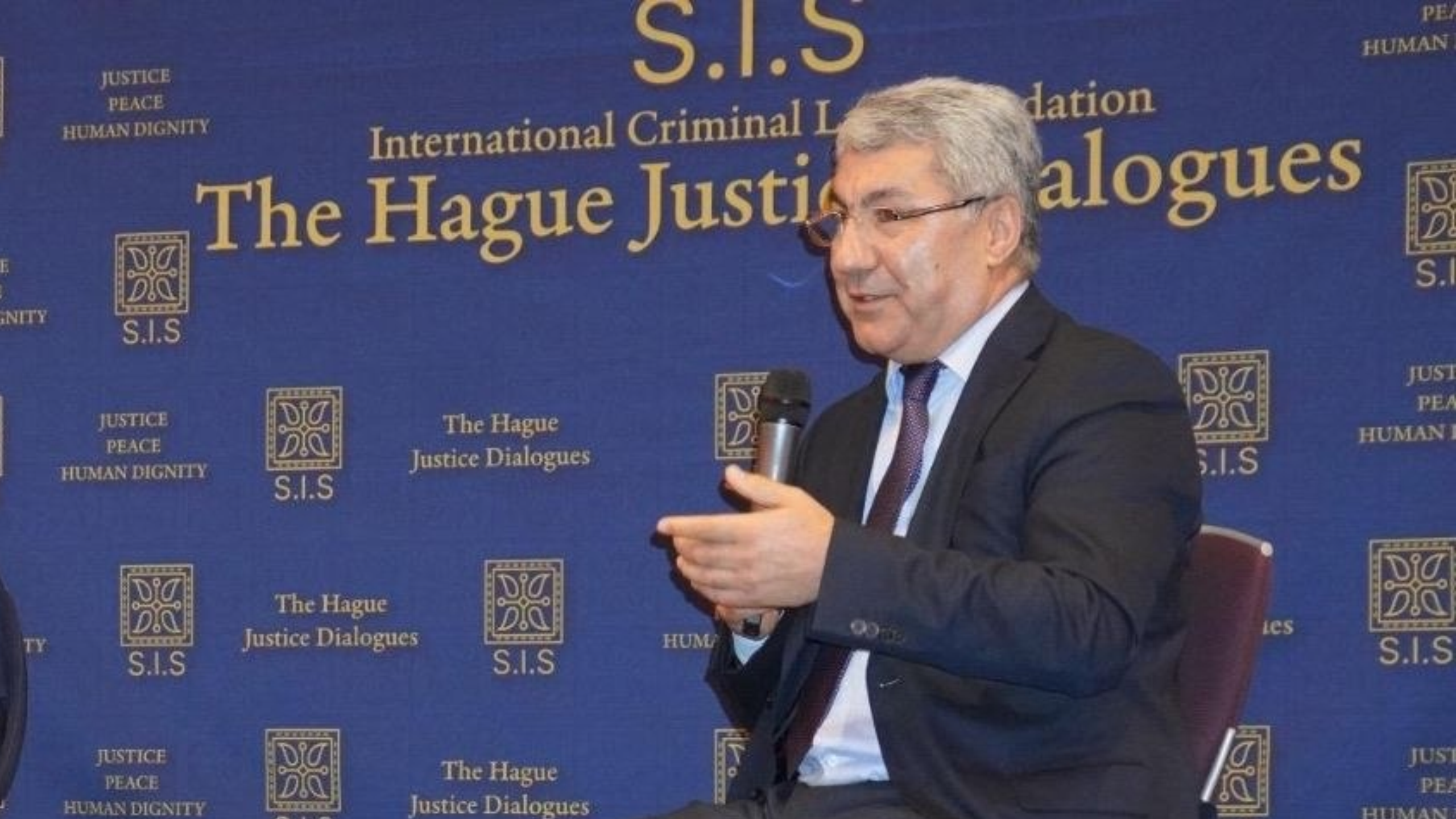
Muhiddin Kabiri in The Hague: Signing a Peace Agreement Is Not Enough to Secure Lasting Peace
Payom TV | October 18, 2026
Muhiddin Kabiri, leader of the National Alliance of Tajikistan (NAT), an opposition politician and former member of the Commission on National Reconciliation, spoke at The Hague Justice Dialogues 2026, an international forum held in the Netherlands on October 14–15. His remarks focused on Tajikistan’s experience of achieving peace, the difficulties of implementing the peace agreement, and the fate of justice and human rights in the post-war period.
In an exclusive comment to Payom TV, Kabiri said the organisers had invited him to present Tajikistan’s experience, explaining how the country had achieved peace and, more importantly, whether justice had been secured after the peace agreement was signed.
According to Kabiri, Tajikistan’s experience is relevant to the international community because the country succeeded in reaching a political settlement through negotiations following its civil war. However, subsequent developments differed significantly from the initial success of the peace process.
He emphasised that one of the central questions in his presentation was how the achievements of peace agreements could be protected against the monopolisation of power and the erosion of political balance.
International Forum Brings Together Diplomats, Legal Experts and Human Rights Advocates
The Hague Justice Dialogues 2026 took place at Hilton The Hague under the theme “Justice, Peace and Human Dignity.” The event was organised by Stichting Internationaal Strafrecht (S.I.S.), a foundation concerned with international criminal law.
The forum’s principal objective was to discuss justice during wartime, the protection of victims of armed conflicts, and the restoration of justice after conflicts end.
Among the issues at the centre of the discussions were the situation in Afghanistan, conflicts in the Middle East, the question of Palestine, and the experiences of countries emerging from war.
According to the official programme, October 14 was reserved for welcoming international guests and holding preliminary meetings, while the main forum sessions took place on October 15.
Farhad Rafiq, chair of the organising foundation, and Cornelia Meyer, an expert on geopolitics and economics, were among the speakers scheduled for the opening ceremony.
The first session, “When War Tests Justice,” addressed the rule of law, victims’ rights, the documentation of international crimes, accountability for perpetrators, and transitional justice.
Speakers included criminal lawyer Tasnime Akunjee, human rights expert Dr Umed Shams, Professor Nasrullah Stanikzai, and Fadel Abdul Ghany, founder and executive director of the Syrian Network for Human Rights.
Another session, devoted to protecting human life during and after war, examined women’s and children’s rights, the situation of refugees, forced displacement, and the international community’s responsibilities.
Contributors included Shukria Barakzai, a former Afghan ambassador and member of parliament; lawyer Qais Siddiqi; Charles Lawley of Action For Humanity; and Professor Marike Paulsson.
The diplomatic session, “From Diplomacy to Protection,” brought together government representatives, diplomats and international experts.
Its programme featured Mounir Satouri, a Member of the European Parliament and chair of its Subcommittee on Human Rights; former Dutch Foreign Minister Uri Rosenthal; representatives of the Netherlands Ministry of Foreign Affairs; diplomats from Pakistan and Cyprus; and experts on Afghanistan.
The forum also featured a dedicated session on journalism during wartime, focusing on the protection of truth, media responsibility and human rights.
Tajikistan’s Peace Experience Returns to International Discussion
Speaking to Payom TV, Muhiddin Kabiri described renewed international attention to Tajikistan’s peace experience as an important development.
He noted that many years after the signing of the General Agreement on the Establishment of Peace and National Accord, Tajikistan’s experience is discussed less frequently at international gatherings.
Even when the peace process is mentioned, he argued, its long-term consequences often receive insufficient scrutiny.
Kabiri therefore viewed his invitation to The Hague as a valuable opportunity to return Tajikistan to international discussions by examining not only how peace was achieved but also what subsequently happened to it.
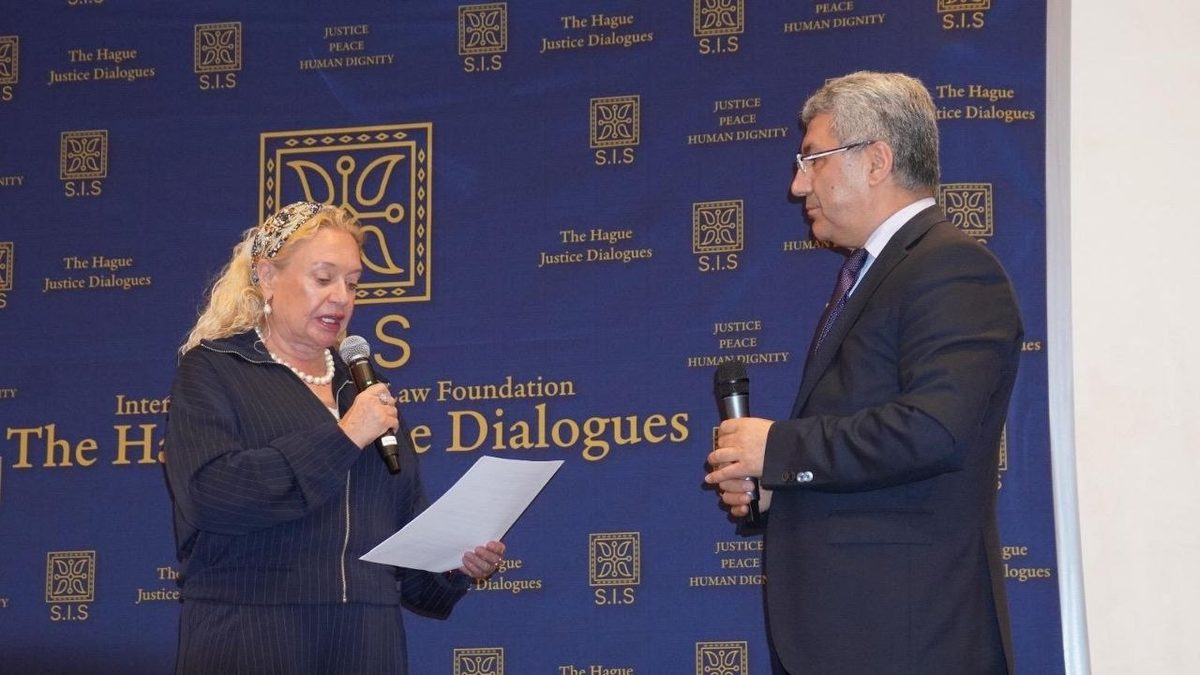
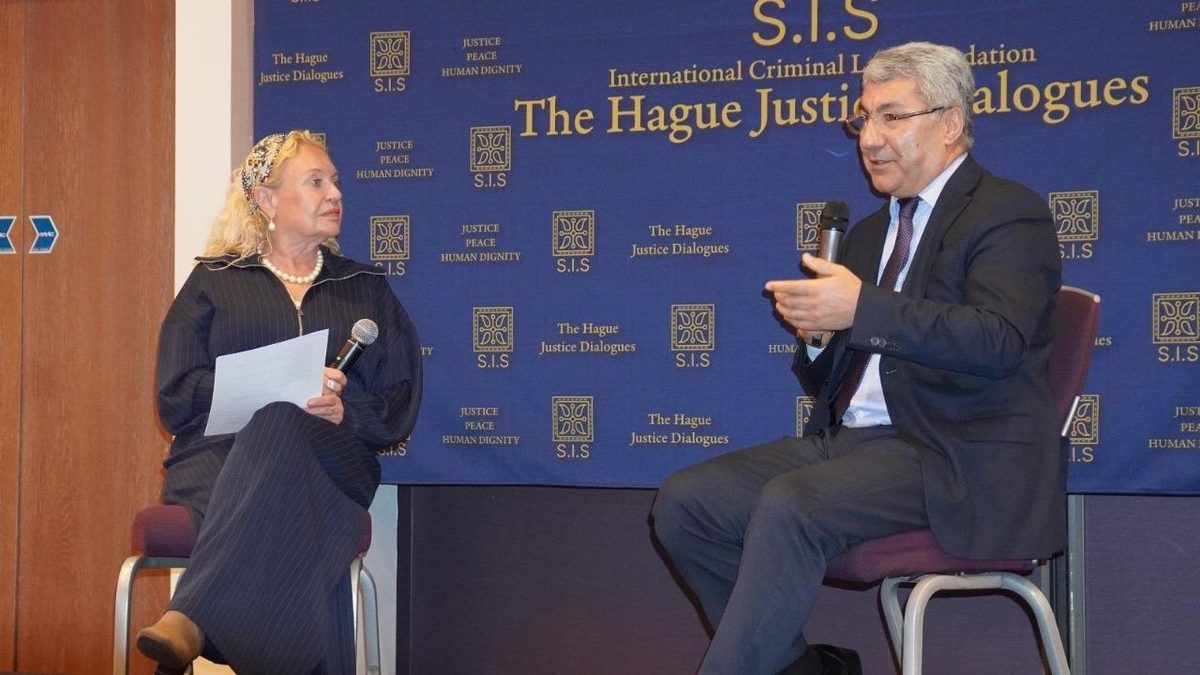
The official forum programme included a separate session for Kabiri titled “Special Dialogue on Peace and Reconciliation.”
Held on October 15 under the theme “Post-Conflict: From Division to Dialogue,” the discussion focused on the experience of moving from conflict towards a political settlement.
According to Kabiri, the conversation involved himself and a representative of the forum’s organising leadership. They discussed the path to peace, the details of the negotiations, and developments following the signing of the agreement.
He said he paid particular attention to what happened after the peace agreement was concluded, what its eventual outcomes meant for Tajik society, and whether its objectives were ultimately realised.
Kabiri: The Peace Process and Its Long-Term Outcomes Must Be Judged Separately
A central argument in Kabiri’s remarks was that Tajikistan’s peace experience should be divided into two distinct stages.
The first stage, he explained, covered peace negotiations, the conclusion of the agreement, and the initial period of implementation. The second concerned the continued implementation of the agreement and its eventual consequences.
Kabiri stressed that the two stages should not be assessed in the same way because they produced different outcomes.
He described the peace negotiations, dialogue between the opposing sides, the signing of the 1997 agreement, and even the first phase of its implementation as a positive and successful experience, despite the considerable difficulties involved.
The General Agreement on the Establishment of Peace and National Accord was signed on June 27, 1997, by the government of Tajikistan and the United Tajik Opposition, laying the foundation for the end of the civil war.
However, Kabiri argued that the success of reaching a peace settlement did not necessarily mean that all the agreement’s political and legal objectives were preserved in subsequent years.
In The Hague, he presented the distinction between the initial achievements of the peace process and its later outcomes as one of the most important lessons of Tajikistan’s experience.
In his view, Tajikistan demonstrates that even a peace agreement achieved through lengthy negotiations and mutual concessions can gradually move away from its original objectives.
From Participant in the Peace Process to Witness to Its Consequences
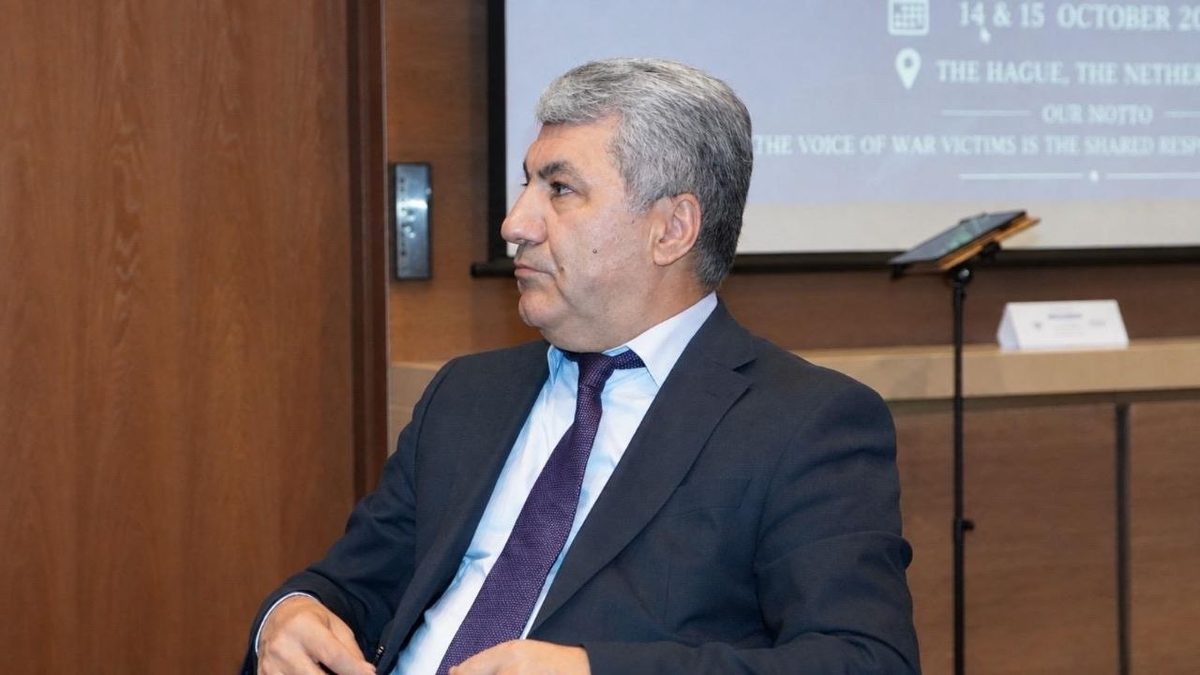
Muhiddin Kabiri stressed that his contribution to The Hague forum was based on more than theoretical research or political observation.
He described himself as a direct participant in Tajikistan’s peace process, saying he had been involved since the earliest days of the Commission on National Reconciliation.
According to Kabiri, he initially served as an assistant to the commission’s chair before becoming a member of the commission himself.
The Commission on National Reconciliation was established after the 1997 peace agreement to oversee the implementation of arrangements between the government and the former opposition.
Kabiri said he had experienced the subsequent stages of the peace process not simply as an observer but as a direct participant.
He also described himself as someone who suffered from the process’s later negative developments and was eventually forced into exile.
He suggested that this personal experience may have been particularly relevant to the forum’s participants, who could hear about Tajikistan’s peace process not only from researchers but also from those who directly witnessed and participated in it.
This aspect of his remarks was connected to a broader theme of the forum: post-conflict justice.
It raised the question of what happens to those who helped establish peace after the conflict ends, and whether the resulting political system can protect the rights and security of all parties to the settlement.
Absence of Tajik Government Representatives
In his comments to Payom TV, Kabiri expressed regret that no official representatives of the Tajik government attended the forum.
According to him, the organisers had previously indicated that government representatives from Tajikistan had also been invited and had promised to participate. Ultimately, however, no official Tajik government representative attended the event.
Kabiri said their presence would have been valuable in allowing the government’s position to be heard and in facilitating a more comprehensive discussion of Tajikistan’s peace experience.
He emphasised that, in their absence, he had sought to maintain a balanced assessment of the peace process rather than present an entirely one-sided account.
For that reason, he said, he had also highlighted the achievements of the negotiations, the signing of the peace agreement, and the early phase of its implementation.
How Can the Achievements of Peace Be Preserved?
According to Kabiri, one of the most important issues he raised in The Hague was the danger that the positive results of peace agreements could be undermined by the monopolisation of power.
He believes Tajikistan’s experience offers valuable lessons for countries currently experiencing armed conflict or preparing for peace negotiations.
Speaking to Payom TV, Kabiri argued that lessons should be drawn from Tajikistan so that the achievements of peace negotiations do not later fall victim to attempts to establish one-party or personal rule and concentrate all political power in the hands of a single group.
He stressed that merely reaching a peace agreement is not enough. The crucial question is how its achievements are preserved after signing and whether justice is secured for all parties to the conflict.
This question arises against the background of the gradual deterioration of relations between Tajikistan’s government and former opposition forces in the years following the peace settlement.
In 2015, the Islamic Renaissance Party of Tajikistan, one of the principal opposition forces involved in the peace process, was banned by the country’s Supreme Court.
Tajik authorities accuse the party of terrorist activity, while its leadership and representatives reject the allegations and describe them as politically motivated persecution.
Kabiri continued his political activities outside Tajikistan following these developments.
In his assessment, Tajikistan’s experience illustrates how the achievements of a peace agreement can be lost when effective political and legal guarantees are absent and the balance of power changes.
This assessment formed one of the central messages of his participation in The Hague forum.
Tajikistan and the International Criminal Court
Muhiddin Kabiri also highlighted the significance of holding such a forum in The Hague.
He said the city had particular relevance to discussions of Tajikistan because materials and complaints concerning the actions of Tajik authorities had been submitted to the International Criminal Court (ICC).
In April 2025, representatives of the Islamic Renaissance Party of Tajikistan and organisations working with it announced that they had submitted materials to the ICC concerning alleged human rights violations and possible international crimes in Tajikistan.
Kabiri said he understood that these materials were under review and expressed hope that participation by Tajik representatives in international forums would help draw greater attention to the issue.
It is important to emphasise that submitting materials to the International Criminal Court does not, in itself, mean that a formal investigation has been opened, charges have been brought, or any crime has been proven.
The precise procedural status of the materials before the Court has not been independently confirmed through the available sources.
Nevertheless, Kabiri believes that discussing Tajikistan’s peace experience at international forums can contribute to a better understanding of the country’s human rights situation and political developments.
How Sustainable Can Peace Be Without Justice?
The central issue Muhiddin Kabiri raised in The Hague went beyond the history of Tajikistan’s civil war or the circumstances surrounding the signing of the peace agreement.
He sought to present Tajikistan’s experience as a question of international significance: a country that succeeded in achieving peace through negotiations but subsequently encountered serious difficulties in preserving the political and legal outcomes of that settlement.
According to Kabiri, the international community must pay attention not only to the signing of peace agreements but also to their long-term implementation, the protection of the rights of those involved, and safeguards against the monopolisation of power.
He also expressed concern about the current human rights situation in Tajikistan, arguing that the country’s experience offers lessons both for the wider region and for other states affected by conflict.
The Hague Justice Dialogues 2026 concluded after discussions of justice, peace, victims’ rights, the role of diplomacy, and the responsibilities of the international community. The Afghan newspaper Hasht-e Subh also highlighted these central themes in its October 15 report.
Kabiri’s participation brought Tajikistan’s peace experience back onto an international discussion platform after many years of relatively limited attention.
His principal message was that Tajikistan’s experience should not be assessed solely on the success of signing the 1997 peace agreement.
A comprehensive understanding also requires examination of the agreement’s subsequent fate, the parties’ fulfilment of their commitments, and developments in justice and human rights in the years that followed.
The question raised by Tajikistan’s experience therefore remains open: how can a country not only achieve peace but, more importantly, prevent the achievements of that peace from being dismantled in the years that follow?


