

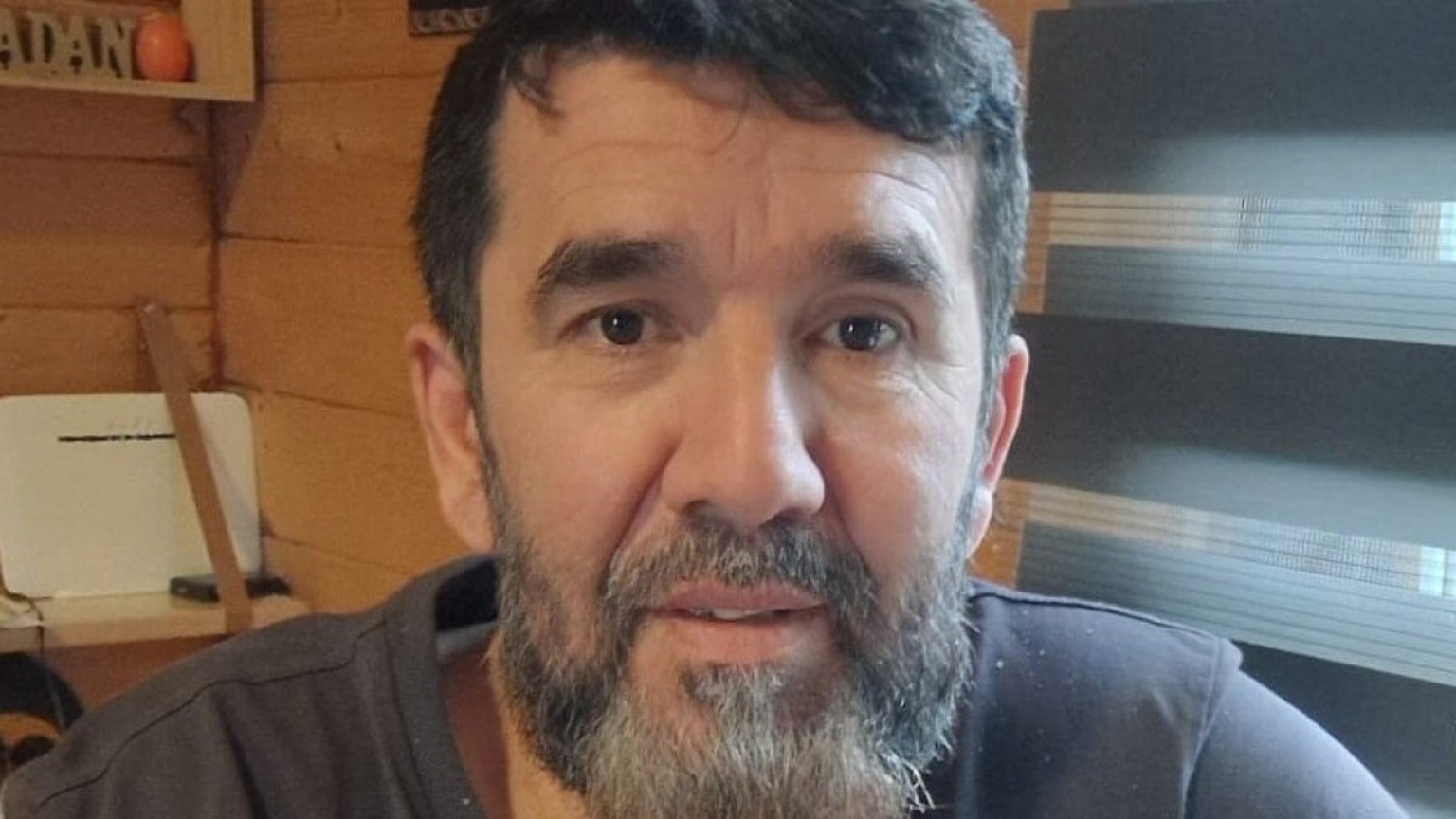
Germany Says It Has No Information on Jailed Tajik Activist Asadullo Boboyev
The German government has told members of the Bundestag that it has no information about the arrest or criminal proceedings against Asadullo Boboyev in Tajikistan. The statement comes despite reports from Human Rights Watch that the opposition activist was imprisoned following his deportation from Germany. The rights organisation has called on Berlin to explain why he was returned to Tajikistan.
The Bundestag’s press service published a summary of the government’s response on October 27, 2026. The response itself was submitted by the German Federal Ministry of the Interior on October 21 and registered on October 22 as Bundestag document 21/8768.
The parliamentary questions were submitted by members of the Left Party parliamentary group, including Clara Bünger, Doris Achelwilm and Desirée Becker. They sought to establish what German authorities knew about Boboyev’s fate and what steps had been taken to determine his situation following his deportation. Payom TV had previously reported on the parliamentary inquiry.
In response to a question about the reasons for Boboyev’s arrest, the German government stated that it did not possess the requested information. At the same time, it emphasised that the German Embassy in Dushanbe maintains regular contact with Tajik authorities through established diplomatic channels.
The government also said it did not know whether criminal proceedings against Boboyev currently existed or had existed previously. Asked whether efforts had been made to secure his release, it again referred to its lack of information about his arrest.
According to Human Rights Watch, 54-year-old Asadullo Boboyev was deported from Germany on June 20, 2026, together with his adult son, Muhammad, and was arrested upon arrival in Dushanbe.
Boboyev had lived in Germany with his family since 2017 and had been involved in the activities of the Reform and Development of Tajikistan movement. His asylum application had been rejected. His wife and two daughters remained in Germany.
On October 22, Human Rights Watch reported that Boboyev had been sentenced to 17 years in prison. Citing a media report, the organisation identified September 21 as the date of the verdict and noted that Tajik authorities had not publicly disclosed details of the case.
Human Rights Watch stressed that, before his deportation, it had warned German authorities about the risk of political persecution and ill-treatment faced by activists of this kind. An official explanation from Tajik authorities concerning the details of Boboyev’s conviction was not available in the sources reviewed.
An important chronological distinction must be made: the German government’s response was submitted before the publication of Human Rights Watch’s October 22 statement. It would therefore be inaccurate to describe that response as a direct reaction to the report of Boboyev’s 17-year prison sentence.
German lawmakers had also asked whether assurances had been obtained from Dushanbe before the deportation that Boboyev would not be arrested.
The government did not provide a specific answer, citing personal data protection and its general policy of not commenting on individual cases.
Regarding mobile phones and other electronic devices, the government stated that such equipment is generally not handed over to the authorities of the receiving country. This statement does not confirm that Boboyev’s phone was transferred to Tajik officials.
According to Bundestag figures, 12,891 Tajik citizens were registered in Germany’s Central Register of Foreigners at the end of August 2026.
Of these, 922 were legally required to leave Germany but held Duldung, a temporary suspension of deportation. Another 152 were required to leave but did not hold such protection.
Together, these two categories accounted for 1,074 Tajik citizens. The figures reflect their legal status at the end of August and do not mean that all of them had already been deported.
The statistics also show that Germany deported 27 people to Tajikistan between January and August 2026. Two were women and one was a minor.
The German government acknowledged that political freedoms are restricted in Tajikistan but stated that prison conditions had improved in recent years. However, this section of the response provided no specific evidence or indicators to substantiate the claimed improvement.
Human Rights Watch describes Boboyev as the fourth Tajik opposition activist to have been imprisoned in Tajikistan following deportation from Germany since 2023.
According to the organisation, Abdullohi Shamsiddin, Bilol Qurbonaliyev and Dilmurod Ergashov received prison sentences of seven, ten and eight years, respectively.
Human Rights Watch questions the legitimacy of the charges against these activists and urges Germany not to return government critics to countries where they face a serious risk of human rights violations.
Berlin’s response leaves the central question unanswered.
If a state deports a person and subsequently has no information about that individual’s arrest or criminal prosecution, serious questions arise about the effectiveness of its risk assessment procedures and its ability to monitor what happens after deportation.
Regular diplomatic contact can offer meaningful human rights protection only when it produces verifiable information and concrete action.
The published German government response provides no evidence that such an outcome has been achieved in Boboyev’s case.


